Announcement
Free Auto Repair Help. Need an auto tech? You've come to the right place. Hard starting? Poor mileage? Foreign or domestic? We can help!

With thousands of members, GreenFlag Auto uses the community Support Forum as a virtual service desk for automotive support, including pickups, light trucks and SUVs. Member helping member; fast, friendly and free!

Register | Visit the Forums
Recent Auto Repair Help
Boris Said
Dale Jr On Pole
New Products
Wd-40
Danica Is Back
# 48 Just Too Good
Pickup
Jeff Burton & Bobsleds
Jamie On The Pole At Fontana
1997 Gmc Sierra Cranks But No ...
Recent Automotive News
Burn Time
Vacuum Gauge Basics
Techs & Tools
Gates Belt Tool
Vortec No Start
Daytona
Lead Wheel Weights
Toyota Recall
Goodbye Colorado & Pontiac
Cold Weather Starting
Welcome to Green Flag Auto, would you like to register or login
All Times Are GMT
Total Unique: 208338 | Uniques today: 23
Users online: 7 | Max. users online: 178
Main Menu

Automotive News
Search Green Flag Auto
News Categories
News Archive
Articles
Register
User CP
Member List
FAQ's
Polls
Stats
About Us

Forums

Auto Repair Forum

Auto Repair Questions
Asian/Japanese Imports
Daimler-Chrysler Products
General Motors Products
Ford Products

Community
NASCAR Racing
Open Wheel Racing
Local Track Racing
Comments/Suggestions
Off-topic

Register on the Forum
View Control Panel

Registered members: 3250
Posts on Forum: 5737
We Welcome: montes151


Poll
Do You Drive Less Due To Price
Yes
No
No Because of necessity
Burn Time
Posted by Crew Chief on 07 Mar 2010 - 17:28 0 comments
Comments
Burn time seems to be a term that many do not understand. I used it in my Vacuum gauge topic and it has brought up a lot of discussion. It is simply the length of time that the fuel in the cylinder burns as measured by a scope or engine analyzer. The longer the burn the less efficient the cylinder is performing, usually caused by low compression.
With today’s cramped engine compartments it helps to narrow down a problem cylinder rather than do a compression test on all cylinders. I think more techs are using a leak down test on problem cylinders as this provides more information than a compression test.
If I had my vehicle in a shop and they wanted to do an outdated wet and dry compression test I would consider going elsewhere, sure it works but there are tests that will provide more accurate info. Many shops are at $100 an hour so any time saving tool they use is saving money.
I do think that many of these new tools and test equipment that are necessary to work on the modern vehicle is slowly moving the DIY out and forcing them to go to a shop. More on this later.

Last comment was by No one

Vacuum Gauge Basics
Posted by Crew Chief on 01 Mar 2010 - 16:19 0 comments
Comments
Several enquires about the use of a vacuum gauge. I think I covered this before but it is important. I mentioned a vacuum transducer hooked to a lab scope, this will display the vacuum in a wave form. It is very useful to locate a bad cylinder and eliminate the need to check compression in all the cylinders valuable time saver in today’s cramped engine compartments. It takes some trial and error to understand the wave but after using it you will find it an invaluable tool. Burn time as shown on a scope is also a useful tool in locating a bad cylinder. Do not short out any cylinders to see what they look like as this can cause a lot of problems.

A vacuum gauge can also tell you the condition of the engine check a known good engine to obtain the correct vacuum and anything under this is usually an engine problem. Usually low compression or just a worn out engine. A bouncing vacuum gauge is also a telltale sign of a problem usually valves or one cylinder not performing correctly. Valve timing can also cause low vacuum. With older engines the carb and timing has to be correctly adjusted before checking for low vacuum.

Cranking vacuum on a no start can also tell you if you have a valve timing problem among other problems anything above 3 In is usually Ok but here again check a known good engine for comparison. The altitude of your location is the reason for checking for a known good value.

Last comment was by No one

Techs & Tools
Posted by Crew Chief on 27 Feb 2010 - 16:00 0 comments
Comments
I took some heat for my topic on the Gates belt inspection tool. One of the reasons I do this is to stir the pot and bring forth controversy. As I have said before Techs have a hard time agreeing on anything that has more than one option.

One item of discussion that I agree with is that the vacuum gauge is also a tool that is not high tech but is a very useful diagnostic tool. Yes, there is a vacuum transducer that connects to a lab scope to help in locating a miss but to quickly determine engine condition or help diagnosis a no start you can’t beat the ease of use of a vacuum gauge.

I also agree that we use a lot of flashy tools that could be performed by a simpler one. One case in mind is the non-contact stat many times we could use a regular stat but we grab the non-contact, because of ease of use and why have it if you are not going to use it.

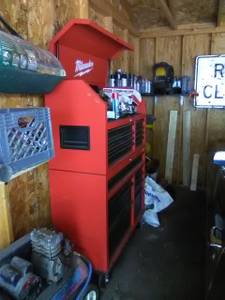
A recent tools magazine showed a techs new tool box and it was over 6 feet high, how do they access those top drawers without a stool, it was at least 15 feet plus long. I would guess he had more invested then my first house cost. But then our tools were worth about the price of a car so with that in mind they are about equal.

I do wish I still had a shop so I could justify buying some of the cool new tools. Labor rates exceeding $100 an hour in many places, with the cramped engine compartments and complicated systems in today’s vehicles today’s techs need every tool they can put their hands on to make their job easier.

Last comment was by No one

Gates Belt Tool
Posted by Crew Chief on 19 Feb 2010 - 16:50 0 comments
Comments
Gates came out with a gauge to use in inspecting there new belts, they have a square groove, and can wear without the tell tale signs of a regular belt. I have waited for this tool for some time, I know I need to get a life; it is a little plastic rod with a thumb hole on the end. I was totally disappointed in today’s shops there is a ton of sophisticated very expensive equipment and this is what I am expected to use to check one of the major parts on a vehicle. Next to brakes and steering I feel the belt is an important part of the vehicle.

This does not even look like it would be a decent selling tool as I think to buy something customers like to touch or at least see what they are buying. IE Transmission fluid looks dirty, fuel filters are rusty but this little plastic thingy looks like it belongs in the drawer with the obsolete tools that you just can’t bring yourself to throw away.

It is designed to be a selling tool but I still think the old visual inspection is still the best way to. I can see it being used if you have a noisy belt and cannot locate a cause and want to eliminate the belt as it will take some time for us to learn the traits of this new belt.

Look on the bright side I got something free from gates and it brightened my day.

Last comment was by No one

Vortec No Start
Posted by Crew Chief on 15 Feb 2010 - 17:49 0 comments
Comments
The vortex engine is perhaps the best engine GM has with the exception of the 3.8 and in my opinion that can’t be beat. However the Vortec has some problems mainly with the fuel. The pressure and volume has to be right on specs. If you have spark and you have to have spark or at least a tach signal for the PCM to power the fuel pump relay and is improbable but not impossible to have a tach signal and no spark. Check the fuel supply.
If you have a Vortec engine that will not start cold at times but always starts hot it is usually a fuel problem and it may be a filter but this should also cause problems at highway speeds. Spray carb cleaner into the throttle body and if it starts it is a fuel problem. I have a refillable spray can that I put fuel in but as most DIY will not have this carb cleaner will work just do not use too much 3 or 4 short squirts should do it. It may not start but if it tries to you know you are on the right track.
The other problem the Vortec has is the lines in the fuel distribution system crack or the poppet valves stick this usually causes a no start or extended crank with a hot engine it may also set a rich fuel code. You do have to remove the upper manifold to check this Distribution rail, or octopus, it has come down it price some but it is still expensive.
You can pull the plugs and check for excessive fuel in a cylinder and this is an indication of a stuck poppet valve.


FYI If you have a jerking problem that feels like a transmission or torque converter problem replace the fuel filter 9 times out of 10 it will solve your problem.
If your engine not a Vortec, starts fine cold but has an extended crank time hot check the Fuel regulator.

Last comment was by No one

Daytona
Posted by Crew Chief on 09 Feb 2010 - 15:11 0 comments
Comments
With Mark Martin and Dale Earnhardt on the front row for Daytona is there any doubt that Rick Hendricks is going to continue where he left off last year. Jeff Gordon was the odd man out and I don’t think he looked that great in the Shootout. Did you notice where my black horse Kasey Kahne was running before the last accident, I just hope Petty can keep bringing in the resources necessary to give him the tools he needs?
Carl Edwards was running well until he too was caught up in the mess. I hope Carl can have a better year but Rousch has some problems that need to be addressed and I don’t know if they have figured the problem out completely as of yet. They keep talking about new engines but none of them seem to work out on the track. Ford is the only big three not to borrow from the government so I hope the cat in the hat can keep them happy.
Good news there were 54 entries for the 500 so maybe there is still some teams that have the monies to run of course it always seems like after Daytona many of them fade into the sunset.
Speaking of underfunded teams I hope NASCAR does something about the start and park, true they need to fill the field but let’s try and do it with teams that are competitive.

Last comment was by No one

Lead Wheel Weights
Posted by Crew Chief on 07 Feb 2010 - 17:27 0 comments
Comments
Why do we still use steel weights to balance wheels? I just read that the largest lead polluter in California is wheel weights. We still continue to use them and there are several alternatives that are very close to the same price. Stainless steel being the most obvious and they would not react with aluminum wheels the way lead does. There is also a powdered weight that I don’t know much about. They are both a quality replacement at about the same cost.

I do think that car washes are at the root of the problem as the wheel cleaning brushes tend to remove the weights. They do still come off due to improper installation and they do not attach as securely to the thinner wheels on many vehicles today. I would think there would be a attachment method that would be more secure but, and I may be wrong here, NASCAR uses the same method at around 200 MPH. 3M also has a new system as they call it that looks like the best alternative, I couldnt find a price but it comes as a kit and they glue on.


Years ago when I was younger I used to balance my tires by turning the tire on the rim until it became very close to balanced. I finished it with a small weight always on the inside, when necessary, as I didn’t like the appearance of the weight on the outside. I don’t recall ever doing this for a customer as the cost would probably been higher than the tire.

I do agree that we need to protect our environment for our grandkids but we tend to let some things slip through the cracks and others we expend to much energy.

Last comment was by No one

Toyota Recall
Posted by Crew Chief on 28 Jan 2010 - 17:12 0 comments
Comments
I have to give Toyota an atta boy for stopping production and or sales due to throttle issues. Of course they may have just needed a reason to slow down production as the sticking throttle seems to be a none issue. Supposedly it occurs over time as the linkage wears, if so then some of the responsibility could be placed on the consumer. If the throttle requires extra effort to move then have it checked if it is a recall or not.

2.3 million vehicles will be affected after they just recalled 1.09 million vehicles for floor mat interference with the throttle they earlier recalled 4.6 million for the same problem.
Only a small percentage of the vehicles will be affected, 1 in 100,000, as only the parts built by CTS Corp. are causing problems. The local dealer is advertising a free inspection, as it should be, but if your vehicle is affected they will give you a car to drive until a repair is available.


I remember the days of the Explorer or as it came to be called the exploder when they were rolling over and it ended up to be a tire issue, still have some doubts over that conclusion. Remember the pinto and the Chevy pickups with side tanks that would burst into flames when involved in an accident. Although none of these occurred while the vehicle was still in production but they seemed to drag their feet on the recalls.


I hope the big three take note of this action by Toyota and finally wake up and put the safety and customer satisfaction first in future recalls.

Last comment was by No one

Goodbye Colorado & Pontiac
Posted by Crew Chief on 14 Jan 2010 - 03:06 0 comments
Comments
As most of you know I have been looking for a newer pickup and one of the models I was considering was a Colorado. Now they are going to discontinue the model along with the GMC Canyon. I had changed my mind about a Colorado after reading they had one of the highest rated warranty in that class of pickup. It never really found its place as the larger brother of the Silverado at nearly the same price with fewer options. It also had a low towing capacity and an interior that was lacking a lot of the goodies of the Silverado. I do like that size pickup however I think I am going to stick with my original choice which is a Dakota. The Ranger has terrible crash ratings and the back is not large enough for car seat which is my reason for trading. If I could find the right S10 I may consider it but it is still a little too small.


Why would GM drop Pontiac do they know I own 2 of them a 1986 Sunbird convertible and a 2005 Bonneville, my 4th Bonneville. I don’t think you can find a better road car and the mileage is great also the 3.8 engine is unbeatable. They were the brand of the 442, Judge and the Firebird. With a history like that I would thing they would build on it instead of 2 luxury cars the Caddy and the Buick. Don’t get me wrong the older Rivera was a great car, my wife had one, it had the 3.8 and was also a great road car. I know they must cut the number of models but at least keep the marketing spread among models.

Last comment was by No one

Cold Weather Starting
Posted by Crew Chief on 10 Jan 2010 - 19:55 0 comments
Comments
Where I live it has been bitterly cold, wind chills in the -45, but nice weather is coming this week. So a few words about some maintenance that should be done during the break.
 Check your tires they seem to drop in pressure during cold weather more so with aluminum rims.
 Check the wiper blades and washer fluid, the washer fluid may be frozen and the blades may have been damaged during snow and frost removal.
 Check all fluids PS, transmission and coolant, paying extra attention to the coolant as during extreme cold anti freeze will leak where it normally would not.
 Give the lights a quick walk around older bulbs were affected by the cold but the newer halogen and LED seem not to be.
 Inspect the belts for glazing that may have been caused by snow build up.
 Check the key cylinders and lube if necessary if you have remote unlock this is critical as they are used infrequently and can become sticky very quickly.
Some advice about cold weather starting, with fuel injection it is not necessary to do anything but turn the key or in some cases push the button. If you have auto start this is the best way to start a cold engine the compute or PCM knows what the engine needs to start.

Last comment was by No one

Where Are The Convertibles
Posted by Crew Chief on 26 Dec 2009 - 19:26 0 comments
Comments
Whatever happened to the rag top? I have a 1986 Pontiac sunbird that we enjoy driving in the summer. It was a mid life crisis purchase that I bought with the head gasket out and body in tough shape. We repaired the body painted it and repaired the engine, the interior was in perfect shape the top needs a little work but we never drive it with the top up except to store it for the winter.

In 1965 the first year of the Mustang there were 500,000 convertibles sold many due to the popularity of the Mustang. Back then many had manual tops and were drafty. Approximately 75,000 will be sold this year and many of them are luxury the BMW Z4, Mazda Miata, Lexus a couple Bentleys and Rolls Royce an Audi. Ford Mustang and Chrysler Sebring are the only two made in the US, GM does not have one as does Toyota and Korea. I am only considering cars with a rear seat no matter how small.

The older convertibles were a Sunday drive to enjoy the scenery and the breeze. The newer are pleasant to drive and the hard top German models are like a hardtop. I think the hustle and bustle of today’s society killed the convertible no one takes the time to enjoy a drive anymore. They don’t know what they are missing, of course being retired I have a little more time to stop and smell the roses.

Last comment was by No one

Danica Finally Is Going NASCAR
Posted by Crew Chief on 08 Dec 2009 - 19:26 0 comments
Comments
At last, the long-awaited announcement is official  Go Daddy is taking Danica Patrick to the NASCAR Nationwide Series in 2010. Danica will drive the #7 GoDaddy.com Chevy in a partial Nationwide schedule next season, plus one ARCA race. The Go Daddy Girl will be racing as a member of the JR Motorsports (JRM) team owned by Dale Earnhardt, Jr., Rick Hendrick, Kelley Earnhardt and Tony Eury, Jr. through 2011. "It's been a long time coming, but the stars finally aligned for me with Go Daddy and JRM," Danica said just before making her announcement. "I have always said I love to drive, and if I could make it work to race in both IndyCar and NASCAR  with the right sponsor, like GoDaddy.com and the right team, like JRM  then I'd love to drive in NASCAR!" Go Daddy CEO and Founder Bob Parsons introduced Danica today as she made it official with the unveiling of her new stock car in front of fans and media outside Chase Field in downtown Phoenix. Parsons and the Go Daddy Girl driver were flanked by the brand new bright green #7 GoDaddy.com Nationwide Chevy and the equally distinctive 2010 IndyCar at today's news conference. Go Daddy is leveraging its existing relationship with Earnhardt, Jr. who has also driven for Go Daddy in the Nationwide Series and will continue to work as a Go Daddy spokesperson. Danica's NASCAR races would take place before, after and in between her IndyCar schedule. Michael Andretti, owner of Danica's IndyCar team, Andretti Autosport, addressed that issue. "Danica and I are both working hard for a win at the Indianapolis 500  keeping the race schedules separate will help keep her focused," Andretti said. (GoDaddy.com PR), It was also announced that Tony Eury, Jr. would be her crew chief.
Last comment was by No one

Camero VS Mustang
Posted by Crew Chief on 04 Dec 2009 - 02:03 0 comments
Comments
You would think with all the problems the Big 3 are having they wouldn’t be playing the same old games. Ford and GM are at it however, the 2011 Mustang will produce one more horsepower, 305, then the Camero at 304 it will also have 1 more MPG. You would think they have better things to do then milk another horsepower and MPG just to one up GM. I can’t imagine anyone buying a Camero or Mustang for mileage. The new Duratec all aluminum does sound promising for Ford.
Of course this is not new they have been playing this ever since GM introduced the Camero in 1966 to counter the Mustang 2 years earlier, as usual Chrysler brought up the rear with the Challenger in 1970. I still think the AAR Cuda is the coolest muscle car ever built. I was a Service Manager in a Dodge dealership when it came out and it was fast. Of course I was also there through the introduction of Lean Burn the Aspen and the Omni. Which is the reason I have grey hair?
Chrysler has been doing a lot of bragging lately about the new Challenger but I don’t see it around here the local dealer must have at least 20 or more in stock, I do have to admit it is a sharp ride. If anyone is thinking Xmas for me I like the red with the black stripe.
An afterthought I wonder if the new GM head will boost thinks up a little he is known as a person who shakes thinks up and see who can hang on to keep there job.

Last comment was by No one

New EDPM Belts
Posted by Crew Chief on 30 Nov 2009 - 04:49 0 comments
Comments
The new serpentine belts that are constructed of EPDM construction, which stands for ethylene propylene diene M-class rubber. Visually, it's hard to tell the two types of belts apart, but EPDM belts far outlast and outperform any of their predecessors. Older belts last 50-60 K but I have seen them go a lot farther if they stay clean. The newer EPDM belts will go a 100K easily. The problem is they will not show cracking and materials lose as the older belts do. The valley of the belts wears out making the use of a gauge mandatory to check a belt. They will then begin to make noise and slip the good news is they are very quiet otherwise, even when starting in cold weather with the AC on which has been a problem for years. When the valley wears the length of the belt also will increase causing problems.

A gates wear gauge can be obtained at this site.
http://www.gatesprograms.com/beltwear


Last comment was by No one

Car Myths
Posted by Crew Chief on 23 Nov 2009 - 21:34 0 comments
Comments
Myth: Engine oil should be changed every 3,000 miles.
Reality: Despite what oil companies and quick-lube shops often claim, it's usually not necessary. Stick to the service intervals in your car's owner's manual. Under normal driving conditions, most vehicles are designed to go 7,500 miles or more between oil changes. Changing oil more often doesn't hurt the engine, but it can cost you a lot of extra money. Automakers often recommend 3,000-mile intervals for severe driving conditions, such as constant stop-and-go driving, frequent trailer-towing, mountainous terrain, or dusty conditions.

Myth: Inflate tires to the pressure shown on the tire's sidewall.
Reality: The pounds-per-square-inch figure on the side of the tire is the maximum pressure that the tire can safely hold, not the automaker's recommended pressure, which provides the best balance of braking, handling, gas mileage, and ride comfort. That figure is usually found on a doorjamb sticker, in the glove box, or on the fuel-filler door. Perform a monthly pressure check when tires are cold or after the car has been parked for a few hours.

Myth: If the brake fluid is low, topping it off will fix the problem.
Reality: As brake pads wear, the level in the brake-fluid reservoir drops a bit. That helps you monitor brake wear. If the fluid level drops to or below the Low mark on the reservoir, then either your brakes are worn out or fluid is leaking. Either way, get the brake system serviced immediately. You should also get a routine brake inspection when you rotate the tires, about every 6,000 to 7,000 miles.

Myth: If regular-grade fuel is good, premium must be better.
Reality: Most vehicles run just fine on regular-grade (87 octane) fuel. Using premium in these cars won't hurt, but it won't improve performance, either. A higher-octane number simply means that the fuel is less prone to pre-ignition problems, so it's often specified for hotter running, high-compression engines. So if your car is designed for 87-octane fuel, don't waste money on premium.

Myth: Flush the coolant with every oil change.
Reality: Radiator coolant doesn't need to be replaced very often. Most owner's manuals recommend changing the coolant every five years or 60,000 miles. Of course, if the level in the coolant reservoir is chronically low, check for a leak and get service as soon as possible.

Myth: After a jump-start, your car will soon recharge the battery.
Reality: It could take hours of driving to restore a battery's full charge, especially in the winter. That's because power accessories, such as heated seats, draw so much electricity that in some cars the alternator has little left over to recharge a run-down battery. A"load test" at a service station can determine whether the battery can still hold a charge. If so, some hours on a battery charger might be needed to revive the battery to its full potential.

Myth: Let your engine warm up for several minutes before driving.
Reality: That might have been good advice for yesteryear's cars but is less so today. Modern engines warm up more quickly when they're driven. And the sooner they warm up, the sooner they reach maximum efficiency and deliver the best fuel economy and performance. But don't rev the engine high over the first few miles while it's warming up.

Myth: A dealership must perform regular maintenance to keep your car's factory warranty valid.
Reality: As long as the maintenance items specified in the vehicle owner's manual are performed on schedule, the work can be done at any auto-repair shop. If you're knowledgeable, you can even do the work yourself. Just keep accurate records and receipts to back you up in case of a warranty dispute on a future repair.

Myth: Dishwashing and laundry detergents make a good car wash.
Reality: Detergent can strip off a car's wax finish. Instead, use a car-wash liquid, which is formulated to clean without removing wax.


News source: Autos MSN
Last comment was by No one

Holes Theory
Posted by Crew Chief on 22 Nov 2009 - 17:34 0 comments
Comments
I recently wrote about wires and I stated that sound is carried on the outside if the wire. I have received several Emails “telling me I am nuts among other things”. In truth no one knows where it is carried to an absolute certainty.

Many fields of thought subscribe to the theory that the power is pushed through the wire and returned by the ground. My problem with this is that no ground should be required if all of the amps are used by resistance in other words if a lamp uses all the available, amps, by resistance, ohms, then the lamp should light with no ground necessary.

The holes theory, which makes more sense to me, has a feeder from the ground that draws the power from the source and the power follows that to a ground. Or to put it bluntly the ground sucks. This is seen as nature as a lighting strike. A feeder comes from the ground and the bolt follows that to ground.
A car system works the same a feeder on the inside of the wire is a path from the ground that the power follows to ground. This is why a ground is needed to light the lamp.
This is simplified and to the extent I understand the holes theory. Electricians will talk about delta among other theories mostly as it pertains to 240 and higher voltage but they all still need a ground.
I understand battery, DC voltage, as in cars more than I do house power, AC voltage. To further add validity to my theory this is why ground controlled systems perform better then controlling the power. IE fuel injectors I don’t think we could turn the power on and off as rapidly as necessary using a power controlled circuit. Also when using lower voltages the ground controlled systems seem to work better. I don’t know how a return reading from an O2 sensor or a TPS would work. You would have to measure the resistance and this would not be adequate as to the required accuracy.

Last comment was by No one

Electric Water Pump
Posted by Crew Chief on 20 Nov 2009 - 03:46 0 comments
Comments
When I first heard the term electric water pump associated with a gas engine in a car I thought I had read it wrong. Why would you put an electric water pump in a car. In a dragster or other high powered engine where every horsepower is being sought after there I can see it but in an everyday car.

The advent of cramped engine compartments have brought about many changes and the electric water pump is one of them and I think we will be seeing more of them in the future. They can be placed almost anywhere as long as they have access to the cooling system and they are also very efficient. Most models that now use an electric pump mount it directly to the radiator. This eliminates several space robbing hoses, belts and increases the efficiency. It also decreases the side torque on the crank shaft usually not a worry in a everyday driver but a large concern in high powered engines.

When the water pump was placed in and run by the timing belt. I could see this being a problem. It saved space among other things but it just did not work. Here is where the electric pump will come into play in the future.

I can see a future engine with no belts some of the hybrids have already went this route with a electric AC pump and an alternator run directly off the cam.

Last comment was by No one

F1 And Tires
Posted by Crew Chief on 11 Nov 2009 - 22:38 0 comments
Comments
Bridgestone is leaving Formula One after next year and Pirelli, Goodyear and Michelin have no interest in jumping into the fray. Hankook and several other brands have been mentioned but so far no takers. Honda and BMW have left the series and now Renault is leaving and Toyota is only staying through 2010. Brawn the 2009 manufacturer winner is having money problems after losing Virgin and Honda dollars. Ferrari and McLaren-Mercedes are still on board. Max Mosely was forced out after his sex escapades became public. At least now the story of Danica Patrick makes sense as she is leaving a sinking ship and may well stand a chance to win the Indy 500. I just hope she hires Jimmy Spencer to teach her how to handle the politics of NASCAR in his out behind the garage way. I think she could hold her own against Jeff Gordon among others.
Last comment was by No one

Tire Pressures & Choices
Posted by Crew Chief on 27 Oct 2009 - 16:01 0 comments
Comments
With the rapid changes in temperature we experience this time of year it is time to discuss tire temperature and its effect on pressure. Pressure will rise 1 psi for every 10 degrees in temperature.

It will also increase by 1 psi for every 5 minutes of driving for the first 20 minutes and hold steady after that if there is no increase in temperature from outside influences such as surface temperature or sun. If you drive a few miles to check your tire pressure it could be off by 1 or 2 psi. More if the outside temperature is high and the sun has warmed up the road surface.

A couple of psi doesn’t seem like much but with low profile tires it can be a large percentage of the total volume of the tire with larger tires the effect is less.
Gas mileage is affected by tire pressure not a lot but if you combine it with other saving ideas, less weight in trunk, windows up and several others it can add up to quite a savings.

There are several sites that explain tire rating so I will not go into it in depth now. Tire ratings are a sliding scale the harder the compound the better it wears, has less traction and a harsher ride. The softer the compound the better the ride and traction but it wears out quicker.

I have 3 different tire brands on my vehicles, Toyo, Michelin and Cooper. I have Cooper on my pickup and love them as I do the Toyo on my one Bonneville. The other Bonneville has Michelin and they do ride a bit harsher then I would like but 2 are about in need of replacing. I will probably go with 4 Toyo but I also have a commercial account at the Toyo dealer so the price is less.

Tires are another item that every tech has an opinion on such as oil and blondes. But with tires higher price does mean better quality in most cases. Many dealers offer a ride guarantee with new tires also this is another example where having a good relationship with a shop helps.

Last comment was by No one

Overpriced Cables
Posted by Crew Chief on 20 Oct 2009 - 16:09 0 comments
Comments
I know this post is going to create a lot of controversy. As I have said before everyone has their personal taste in engine oils and many other products. Cables are another area where everyone has an opinion.

I have considerable experience with cables, speaker HTMI or whatever. I have 8 TV’s in my house, yes I know I am addicted, 3 rooms with surround sound with a variety of Media centers TIVO and replaytv’s. Yes I do hate to watch commercials, I like to control my own time, not have it controlled by a TV schedule. In my defense one room is mainly for my grandkids. When they have a sound system with a DVD, as it is meant to be watched. Their attention span is longer.

Monster cables or any other overpriced cable is not worth the money. With HTMI and optical the cost of the cable has no bearing on the quality digital is either on and perfect or off and no amount of money you spend for a cable is going to help. All other cables RG 6, S-Video, composite, coaxial RCA and speaker the cost can make a difference. The amount of shielding is the biggest concern with an S-Video cable a metallic shield is the best option. Insulation is important on RG 6, All others except for speaker wire the connector, wire size, remember the smaller the number the bigger the wire, and insulation are factors to consider. Composite and component should be molded together.

Speaker wire size is a concern but more important is the number of strands of wire. Special alloys, magical filaments or direction specific are all a waste of money. Sound is carried on the outside of the wire so the more surface you have the better the sound. I have used the flat molded wire for surround with success and it is very small about 24 gauge but it has numerous strands. 14 gauge is the one I usually use any bigger and it becomes a problem to connect and route. I do plate all connections with solder including the ones at the component. The exception is sub-woofer wiring use the biggest wire that will fit in the component connector usually this is a 12 but with some of the new style connectors it is a tight fit.

Computer cables RJ-45 are rated, cat 5 and 6 which rates there transmission speed and connectors are rated by their contacts most quality are 50u. All of this is little concern to the average person very few homes need a 550MHz RJ-45 cable or above 50u rated connectors. At some point in time, as more and more services are available on the net, this may change so consider this if doing new construction.

I buy the majority of my cables from Monoprice, there are other sites with equal quality and fair pricing, I just like there cool colors and I would like to know why they use them. Buy several cables at one time to keep shipping costs down.

Cables will develop problems they can come loose RG 6 cables are the worst for this and I wish I knew why, they never move I actually use a wrench to snug mine up and this helps. All cables will develop problems over time and usually the sound or picture deteriorates slowly, with the exception of digital, until you notice a difference.

With any feed use as few splitters as possible, and a booster if necessary.

Always use a surge protector including cable feed and phone if used.

Last comment was by No one


Powered By VirtuaNews Version: 1.0.4 Pro
Copyright © VirtuaSystems 2002-2005